

Top 5 Benefits of Using GDS for Flight Booking
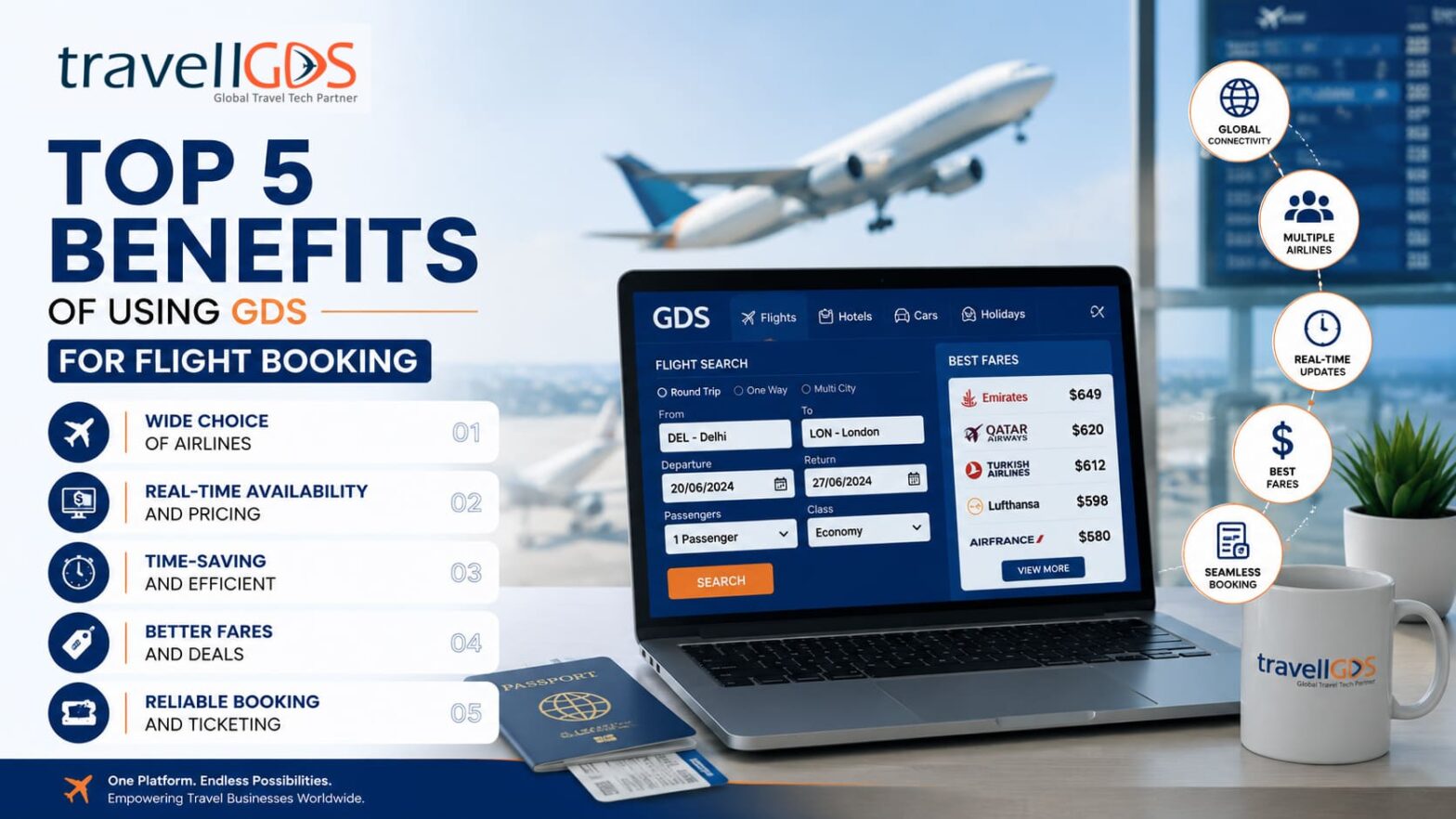
Discover the top 5 benefits of using a GDS for flight booking. Learn how Global Distribution Systems help travel agencies access real-time inventory, competitive fares, and powerful automation tools.
The way travel agencies source and sell flights is evolving rapidly. Agencies that want access to competitive fares, real-time availability, and streamlined booking workflows continue to rely on a Global Distribution System (GDS). In this article, we explore the top five benefits of using a GDS for flight booking and why it remains essential for modern travel businesses.
The travel industry is experiencing a major technological transformation. Travellers expect faster bookings, flexible options, and personalised itineraries. To meet these expectations efficiently, agencies need powerful infrastructure — and the GDS remains at the centre of it.
Whether you run a traditional travel agency, an Online Travel Agency (OTA), or a corporate travel management company, understanding how a GDS for flight booking works is no longer optional. Modern GDS platforms such as Amadeus, Sabre, and Travelport connect airlines, agencies, and travellers through a single ecosystem that simplifies flight distribution and booking management.
1. Real-Time Access to Global Flight Inventory
One of the biggest advantages of using a GDS for flight booking is real-time access to flight inventory from hundreds of airlines worldwide through a single platform.
When an agent searches through a GDS, the system instantly displays live seat availability, fare classes, departure schedules, and connecting flight options. This allows agencies to provide accurate results within seconds instead of manually checking multiple airline websites.
Real-time booking capabilities help agencies:
- Access airline inventory from one system
- View live seat availability instantly
- Compare routes and fare classes quickly
- Manage complex multi-airline itineraries
- Improve customer response time and booking efficiency
Why Real-Time Inventory Matters
Airline pricing and seat availability change constantly. Using outdated or cached information can lead to booking failures and customer dissatisfaction. A GDS ensures agencies always work with live airline data, helping them deliver faster and more reliable service.
Modern travel portals and white-label booking platforms often use GDS connectivity as the core infrastructure powering their booking engines.
2. Access to Competitive and Negotiated Fares
Pricing is one of the most important factors in flight booking decisions. A GDS for flight booking gives agencies access to a wide range of fare types, including:
- Published airline fares
- Private fares
- Corporate negotiated rates
- Promotional airline pricing
This allows agencies to compare multiple airlines in real time and identify the best options for their clients based on pricing, routes, and travel policies.
Better Fare Comparison and Dynamic Pricing
Modern GDS platforms support dynamic pricing intelligence and NDC (New Distribution Capability) integration. This helps agencies access richer airline content, ancillary products, and updated pricing models directly within the booking workflow.
Benefits include:
- Real-time fare comparisons across airlines
- Access to negotiated corporate rates
- NDC content integration
- Automated fare management
- Improved travel policy compliance
3. Streamlined Booking Workflows and Operational Efficiency
A GDS does more than display flights — it simplifies the entire booking lifecycle.
Travel agents can search flights, create bookings, issue tickets, manage itineraries, and process changes from one centralised system. This reduces manual work and eliminates the need to switch between multiple airline portals.
Operational benefits include:
- Centralised booking management
- Faster ticketing workflows
- Reduced manual errors
- Support for complex itineraries
- Automated PNR management
Integration with CRM and Back-Office Systems
Modern travel booking systems built on GDS technology can integrate with CRM platforms, accounting tools, and reporting systems.
For example, agencies can automate:
- Customer communication
- Invoice generation
- Commission tracking
- Reporting and analytics
- Client itinerary management
This creates a more efficient and scalable travel business operation.
4. Ancillary Services and Upselling Opportunities
Airlines now generate significant revenue from ancillary services such as:
- Seat upgrades
- Extra baggage
- Lounge access
- Priority boarding
- Travel insurance
A GDS for flight booking allows agencies to access and manage these ancillary services directly within the booking flow.
Improved Customer Experience
Ancillary integration helps agencies deliver more personalised travel experiences while increasing revenue per booking.
For corporate travel programs, GDS systems can surface policy-compliant upgrades automatically, helping businesses balance traveller comfort and budget requirements.
Key advantages include:
- Integrated seat selection
- Baggage management
- Special service requests (SSR)
- Upselling opportunities
- Enhanced traveller personalisation
The future of flight distribution is not about one single channel. Modern travel businesses are building connected ecosystems where GDS, NDC, and direct airline APIs work together.
5. Reliability, Global Coverage, and Compliance
Reliability is critical in the travel industry. A GDS for flight booking provides the infrastructure needed to support secure and accurate reservations at global scale.
Platforms like Amadeus, Sabre, and Travelport process millions of transactions every year with enterprise-grade reliability and security.
Why Reliability Matters
Travel agencies depend on accurate booking data, especially during high-demand travel periods. A GDS provides:
- Global airline coverage
- Secure booking infrastructure
- Structured PNR data
- Duty-of-care reporting support
- Passenger data management
This is especially important for corporate travel management, where compliance, reporting, and traveller tracking are essential.
How GDS Technology Is Evolving
Modern GDS platforms are no longer limited to legacy systems. Today’s providers offer:
- NDC integration
- REST APIs and XML APIs
- Cloud-based infrastructure
- AI-powered fare recommendations
- Developer-friendly integration tools
Travel agencies building white-label portals and modern booking platforms continue to use GDS connectivity as the foundation of scalable travel technology.
The GDS Remains Essential for Professional Flight Booking
The travel industry will continue evolving with AI, personalisation, and new distribution models. However, the Global Distribution System remains the backbone of professional flight booking.
By using a GDS for flight booking, travel agencies gain:
- Real-time inventory access
- Competitive fare sourcing
- Operational efficiency
- Ancillary revenue opportunities
- Reliable global booking infrastructure
Agencies that invest in modern GDS connectivity today are building a scalable and future-ready travel business.
Frequently Asked Questions
What is a GDS in flight booking?
A Global Distribution System (GDS) is a platform that connects travel agencies with airline inventory in real time. It allows agents to search, compare, book, and manage flights through a single system.
Is GDS still relevant today?
Yes. Even with airline direct booking channels, GDS platforms remain highly relevant because they aggregate inventory from multiple airlines into one interface, making booking management faster and more efficient.
What is the difference between GDS and NDC?
GDS is the traditional airline distribution infrastructure, while NDC (New Distribution Capability) is a newer standard that allows airlines to distribute richer and more personalised content through APIs. Modern GDS providers now integrate both systems together.
Which GDS platforms are most popular?
The leading GDS providers are Amadeus, Sabre, and Travelport.
Can small travel agencies use a GDS?
Yes. Small agencies can access GDS platforms through consolidators, host agencies, or tiered provider programs, allowing them to compete with larger travel businesses.
How does a GDS support corporate travel management?
A GDS helps corporate travel programs enforce travel policies, manage negotiated fares, generate reporting data, and support traveller tracking and compliance requirements.
What is a travel booking engine?
A travel booking engine is a software application that allows users to search and book flights. It connects to a GDS using APIs to retrieve real-time flight and pricing data.
How is AI improving GDS flight booking?
AI helps agencies improve fare recommendations, predict optimal booking times, personalise search results, and automate routine booking workflows using GDS data.